The Genesis Journal · Phenomena
The Six-Rayed Star: Understanding Asterism
Why a handful of sapphires carry a living star across their surface, the geology, the optics and the lapidary's irreversible decision.
20 April 2026 · 6 minute read
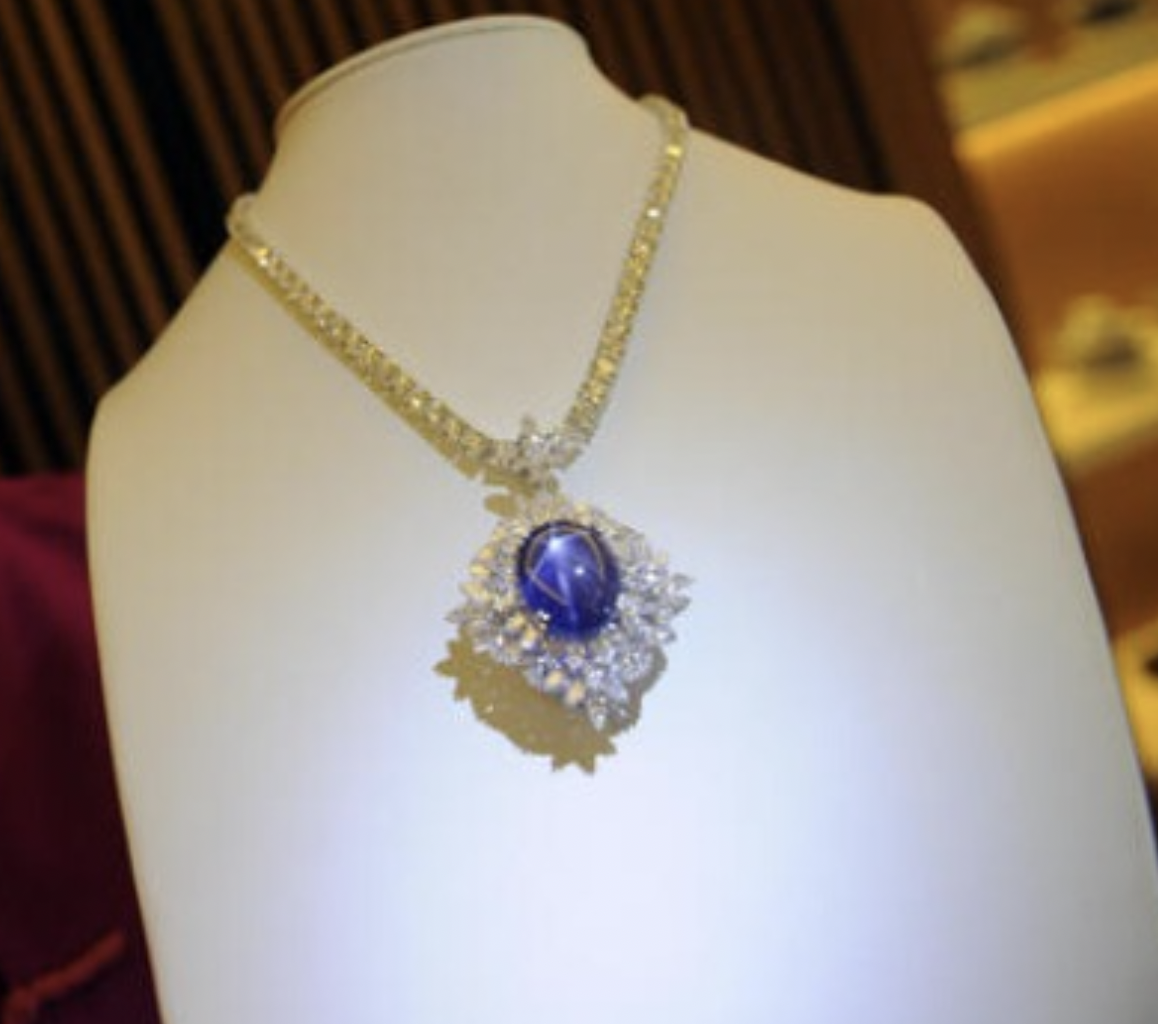
Hold a star sapphire under a single light and move it. The star wakes: six rays gathering on the dome, gliding as your hand turns, dissolving and reassembling. It behaves less like a marking than like an inhabitant. The ancients called star stones guardians; modern optics explains the phenomenon without diminishing it in the slightest.
Silk
As a corundum crystal cools over geological time, titanium that once sat comfortably within the lattice is expelled, crystallising as rutile, needles so fine they are measured in microns. Gemmologists call this material silk. In most sapphires silk is faint and incidental. In a few, it fills the stone in three perfectly ordered directions, set at sixty degrees to one another by the crystal's own symmetry.
Three bands, one star
Each family of parallel needles scatters light into a band running at right angles to its length. Three families produce three bands; three bands crossing at a point produce six rays. The star is therefore not on the stone but in it, a structure of light, rebuilt continuously from whatever illumination the room provides.
The star is not on the stone but in it, a structure of light, rebuilt continuously.
The cutter's one chance
Asterism only appears above a domed surface, which is why star stones are cut en cabochon. The cutter must orient the dome's axis precisely against the crystal's symmetry: a fraction of a degree of error and the star sits off centre forever. On rough of great value, it is among the least forgiving decisions in the lapidary arts.
Judging a star
Connoisseurs ask five things of a star: that it be sharp, complete, centred, mobile, and carried in a stone whose body colour would be admired even without it. Add a documented origin and an untreated state, and the stone enters the small company where the Star of Genesis, 48.95 carats, Burmese, unheated, resides.